
The future sports fan won’t be built on social media alone
The debate around under-16 social media restrictions has prompted brands, sports organisations and rights holders to think differently about how they reach younger audiences. For years, social platforms have been one of the primary routes to building awareness, engagement and affinity with the next generation. As access potentially becomes more restricted, many organisations are understandably asking what they stand to lose.
But for sport, there’s a more interesting question:
Instead of asking how we replace social media, should we be asking where the next generation of sports fans actually comes from?
As digital discovery fragments, the sports organisations that complement online attention with real-world experiences will be best placed to build lasting fandom.
Why sports fan engagement needs to go beyond social media
For years, the pathway to fandom has increasingly been treated as a content play: create, engage, reach, repeat.
But awareness and fandom aren’t the same thing.
Young people don’t experience sport through a linear fan journey. They move between playing, watching, gaming, creating and sharing. And some of the experiences that create the strongest connections have little to do with a feed.
The first time they play a sport.
The athlete who visits their school.
The event they attend with their family.
The club they join with friends.
The sense of belonging that comes from becoming part of a community.
You don’t build a lifelong fan with a viral clip. You build them with experiences.
Across our work engaging young people in sport and physical activity, we’ve repeatedly seen the role participation can play in building stronger connections.
Those experiences can shape confidence, wellbeing, aspiration and belonging. But there is a commercial dimension too.
Research from Two Circles found that 56% of UK sports fans develop their passion for sport before the age of 14, while fans who discover sport early are 2.5 times more likely to spend money on sport over their lifetime.
The earlier meaningful connections are created, the greater the opportunity to build relationships that continue through participation, attendance, merchandise, subscriptions and advocacy.
This isn’t simply a sports participation challenge. It’s a future growth challenge.
Why parents matter to the future of sports fandom
There’s another consequence of the social media debate that deserves more attention: the growing importance of parents.
If social platforms become less accessible for under-16s, what we call the “Parental Algorithm” becomes even more influential.
Parents influence which clubs children join, which events they attend and which sports and athletes they encounter. They’re also making many of the decisions about where family time and money are spent.
At We Are Futures, we’ve spent years exploring the relationship between young people and the adults who shape their decisions. What we see consistently is that young people and parents shouldn’t be treated as entirely separate audiences. For sports organisations, that means youth engagement can’t sit solely within a youth marketing strategy.
The opportunity is to create experiences that engage young people while giving parents reasons to facilitate, encourage and participate in that relationship too.
How enrichment can create new pathways into sport
While social media restrictions have dominated headlines, another development could create significant opportunities for sport: the growing focus on enrichment and access to activities outside the classroom.
School clubs, after-school activities, community coaching, holiday programmes and partnerships between schools and sports organisations all provide potential entry points into sport that don’t depend on social discovery.
For sports organisations willing to meet young people there, that’s a significant opportunity. It means thinking beyond campaigns and building an ecosystem around participation, education, community and belonging.
Show up in schools. Create meaningful first experiences. Make sport accessible and relevant. Connect it with the issues and interests young people care about.
And start building relationships long before someone becomes a ticket buyer or subscriber.
How sports organisations are building the next generation of fans
We’re already seeing organisations think differently about what youth engagement can achieve.
At We Are Futures, we’re supporting the British Horseracing Authority in developing its youth engagement strategy, helping the sport think differently about participation, perception and future audiences.
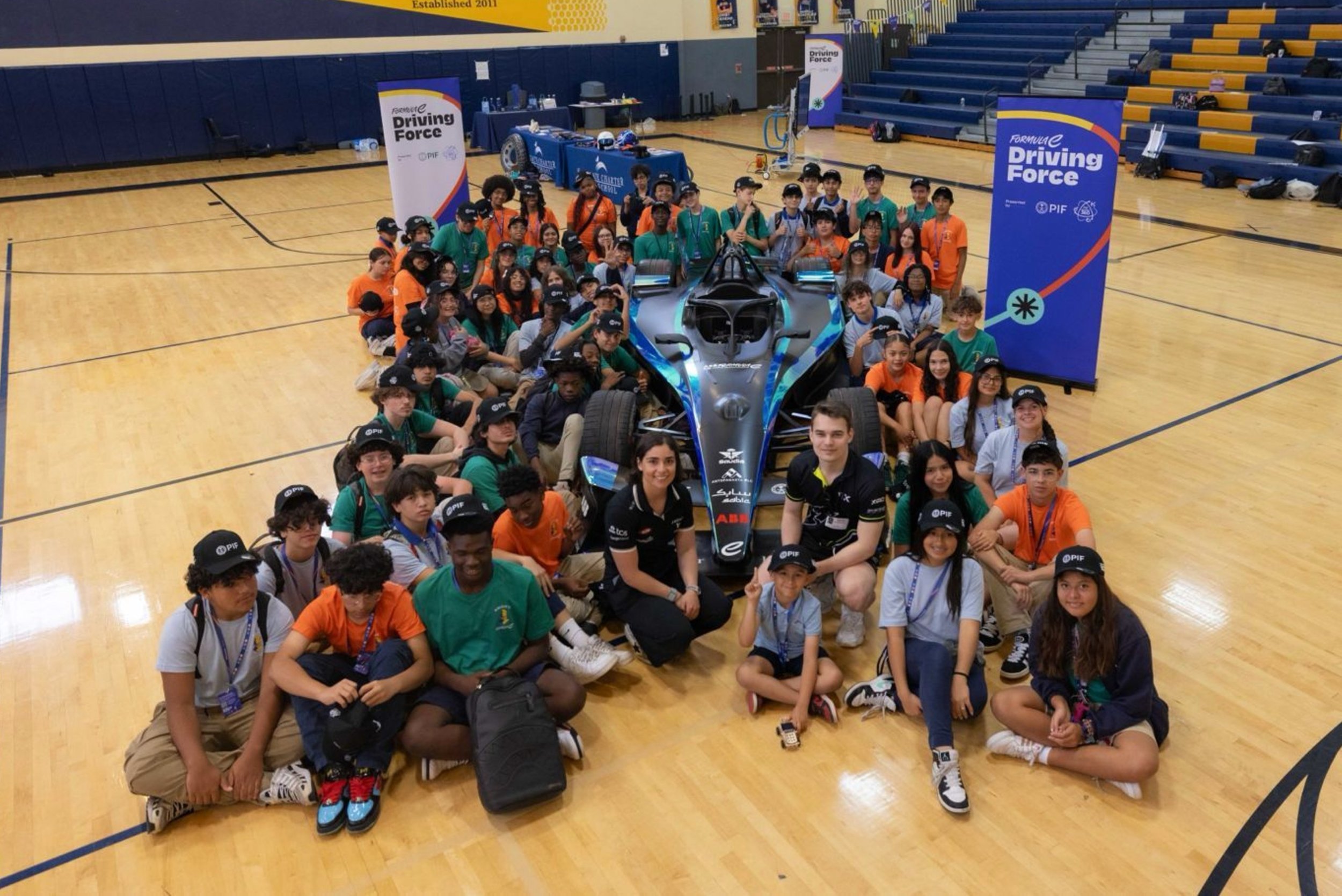
Through our work with Formula E, we’ve connected motorsport with sustainability and STEM, creating relevant new entry points into the sport for young people around the world.
And through our Get Set programmes supporting Team GB and ParalympicsGB on the road to LA, we’ve seen the role athletes and real-world experiences can play in building affinity long before the major sporting moment arrives.
Different sports require different approaches. But the principle is consistent: meaningful participation can create a relationship that passive exposure alone cannot.
What should sports brands do next?
Social media restrictions haven’t created this shift. They’ve accelerated the need to think about it.
With a packed calendar of major sporting moments ahead, there will be no shortage of opportunities for sports organisations to generate visibility.
But visibility alone won’t build the next generation of fans.
Organisations that continue to rely on digital reach as their primary route to youth engagement risk missing the environments where deeper relationships are formed.
Those that invest in schools, communities, enrichment, participation and family engagement have the opportunity to build something much more resilient.
Because the future sports fan won’t be built through algorithms alone.
They’ll be built through experiences. Through participation. Through belonging.
And increasingly, through the parents, teachers and communities that help shape a young person’s world long before social media ever does.